
Celebrating Hackney’s past, shaping its future – since 1967
The Hackney Society’s Buildings at Risk Group is interested in more than just buildings. It considers any element of Hackney’s historic built environment that may be at risk, from parks, churchyards and gardens to signage and smaller items of street furniture such as telephone kiosks and bollards. After almost a year of discussing heritage at risk in its monthly meetings, the group decided to complement this work with a more hands-on project.
Hackney Council’s local list of non-designated heritage assets contains more than 500 entries, but its coverage tends to focus on buildings rather than the smaller features of the historic environment. The Council welcomes nominations for additional assets to be considered against set criteria. The Society therefore developed a participatory project to gather the evidence needed to support a number of local listing nominations, which ran throughout October 2025.
Why Drinking Troughs?
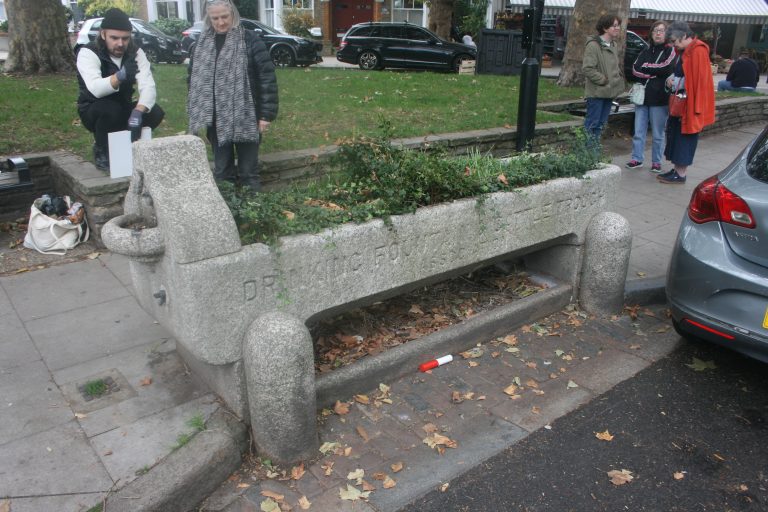
The project focused on the granite drinking troughs installed by the Metropolitan Drinking Fountain & Cattle Trough Association. These fascinating pieces of street furniture reflect nineteenth- and twentieth-century concerns about public health and animal welfare, as well as philanthropy and people’s connections to particular places.
Seven drinking troughs survive on Hackney’s streets. Two are Grade II listed on the National Heritage List for England, while a third, south of Haggerston Park, is also recorded on the list but has since gone missing. Another trough, at Pembury Circus, is already locally listed. This provided a precedent for seeking local listing for the four remaining troughs that had no formal listing protection.
Recording Hackney’s Historic Troughs
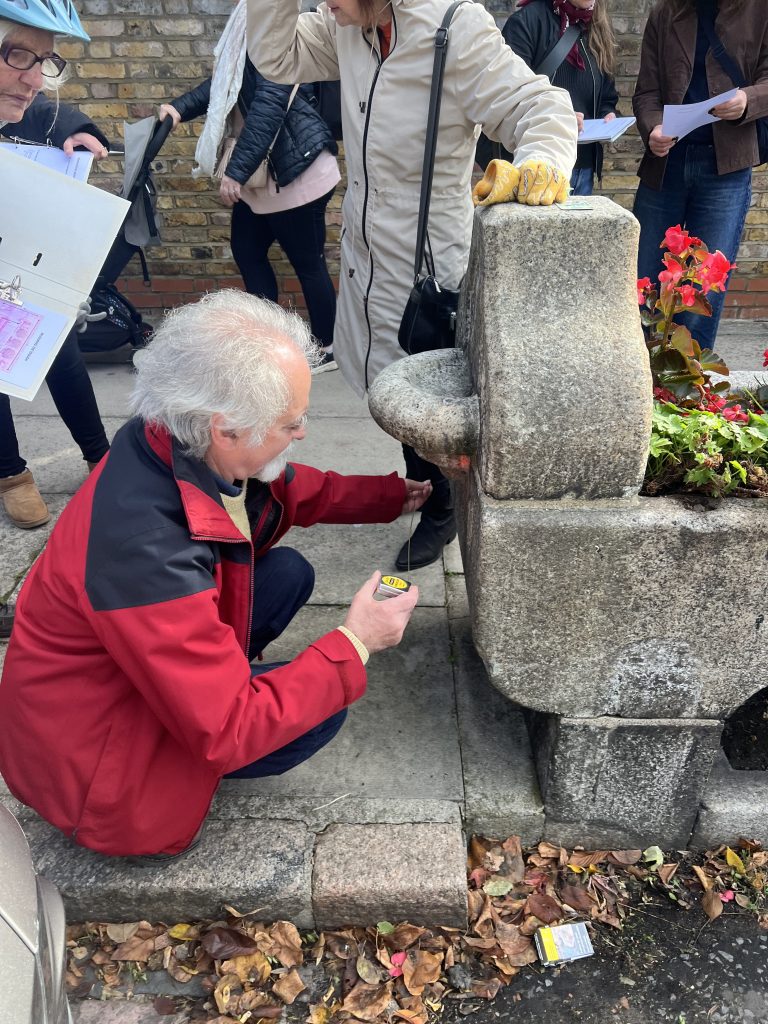
Each trough was the focus of a free recording event held on a Saturday or Sunday morning. Participants could take photographs, measure specific dimensions or make notes on the condition of the structure. The troughs date from between 1881, in the case of the Lauriston Road example, and 1903, when the troughs at De Beauvoir Road and Albion Parade were established. Each has been part of its neighbourhood for more than a century.
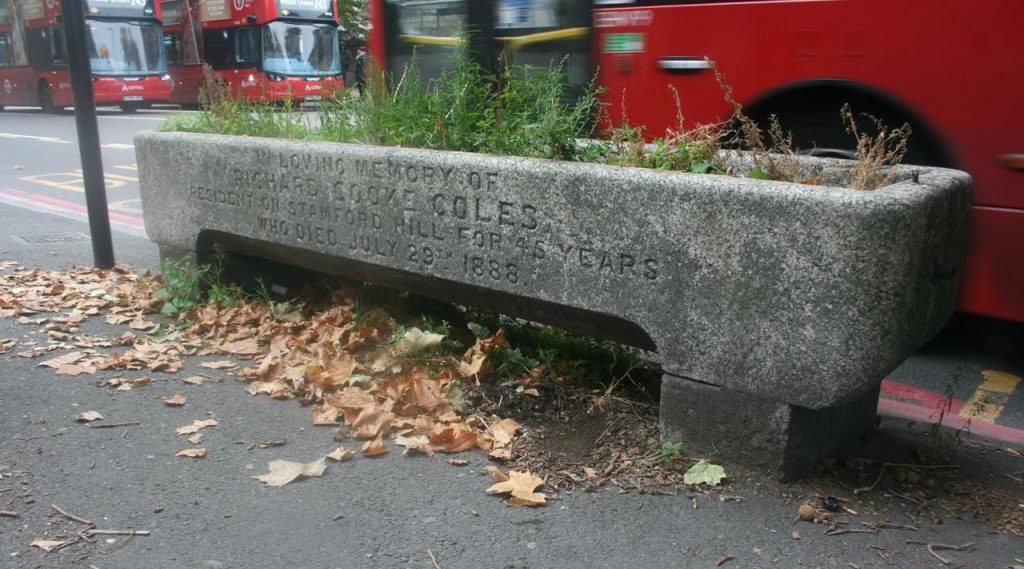
Some also have individual stories to tell. The trough beside Stamford Hill, erected in 1889, bears an inscription commemorating Richard Cooke Coles, who had lived in Stamford Hill for 45 years. Research by a volunteer revealed that Coles died in Folkestone in 1888 and was buried there, making the trough a memorial to someone in the place he had long called home.
Following the recording sessions, guided tours helped participants understand the troughs in their wider historical context. These took place in the immediate area around each trough, while the Stamford Hill event included a longer tour exploring past and present heritage at risk around Clapton Common and Springfield Park.
The troughs may be relics of the past, but they also prompt questions about the present and future of Hackney’s built environment, and the role of planning policy and organisations such as the Hackney Society in shaping it.
Community Participation and Outcomes
Despite taking place in October, the four events enjoyed dry and often sunny weather, alongside enthusiastic participation. Around 50 people attended the recording sessions and/or the subsequent tours. It was an encouraging turnout for voluntary weekend events focused on historic street furniture that might otherwise be overlooked.
After the events concluded, work began on completing the paperwork for four local listing nominations. These were submitted to Hackney Council in mid-November 2025. The assessment process has been delayed for several reasons, and its outcome will need to be confirmed.
The project demonstrated how members of the public can help identify, document and make the case for protecting elements of the historic environment that might otherwise receive less attention than buildings.
For more information about the project or any of the troughs, please email buildingsatrisk@hackneysociety.org.